%402x.svg)

.webp)
We do our best to be accommodating to all individuals with disabilities, but if you need additional assistance, please call our office, or send us an email so that we can provide support.

Hair loss has a way of becoming noticeable all at once.
Maybe your hairline looks slightly higher in a recent photograph. Perhaps styling your hair no longer hides the thinning around your crown. Or maybe you have been watching the change happen for several years and have finally started researching hair restoration.
For many men, one of the first searches is:
“Should I get a hair transplant?”
A transplant can be an important option for appropriate candidates, but there is another conversation worth having before jumping directly to a surgical procedure: Hair Finasteride in Gig Harbor.
Why?
Because a hair transplant moves existing hair follicles to areas where greater coverage is desired. It does not necessarily stop the biological process causing susceptible non-transplanted hair to continue thinning.
That distinction matters.
Finasteride is an FDA-approved prescription medication for male pattern hair loss in men. It works by affecting the hormonal pathway associated with androgenetic alopecia. Clinical trials have found that finasteride can slow progression and improve measures of scalp hair growth in appropriate male patients.
That does not mean everyone considering a transplant should take finasteride.
It means understanding Finasteride for Hair Loss Gig Harbor may be an important part of making a more informed long-term hair restoration decision.
Male pattern hair loss, medically known as androgenetic alopecia, is progressive.
It typically does not happen overnight.
Instead, genetically susceptible hair follicles gradually become smaller through a process known as miniaturization. The hairs they produce may become finer, shorter, and less visible over time.
One important factor in this process is dihydrotestosterone, commonly called DHT.
DHT is produced when testosterone is converted by the enzyme 5-alpha-reductase. In genetically susceptible men, DHT contributes to progressive miniaturization of scalp hair follicles.
This may eventually appear as:
This progressive nature is particularly important when discussing a hair transplant.
Imagine someone who restores the front of his hairline through transplantation while the original hair immediately behind that area continues thinning.
Several years later, the transplanted area may remain while surrounding non-transplanted hair has changed.
That is why long-term planning matters.
Understanding Hair Finasteride in Gig Harbor can become part of a larger conversation about preserving existing hair—not simply replacing hair that has already been lost.
.png)
Finasteride is a prescription medication classified as a type II 5-alpha-reductase inhibitor.
It reduces the conversion of testosterone to DHT.
For male pattern hair loss, the FDA-approved finasteride product Propecia is indicated for men, with a recommended dose of 1 mg once daily. The FDA label notes that generally three months or more of daily use is needed before benefit is observed, and continued use is recommended to sustain benefit.
Finasteride is not an instant hair-growth solution.
Instead, its role is connected to reducing the DHT-related process contributing to androgenetic alopecia.
This is why people researching Finasteride for Hair Loss Gig Harbor should think beyond quick before-and-after transformations.
The bigger question is:
What can help create a sustainable strategy for my hair?
Finasteride has been extensively studied in men with androgenetic alopecia.
Two major one-year clinical trials included 1,553 men between 18 and 41 years old with male pattern hair loss. Participants received either finasteride 1 mg daily or placebo, and more than 1,200 continued into a second year.
Researchers evaluated hair counts, photographs, investigator assessments, and participants' own assessments.
Finasteride improved scalp hair across the study measures and slowed the progression of hair loss compared with placebo.
Longer-term research has also evaluated continued use.
In one study following men for up to five years, finasteride produced durable improvements in scalp hair while participants receiving placebo experienced progressive hair loss.
Another long-term analysis found that finasteride reduced the likelihood of developing further visible hair loss compared with placebo over five years.
This helps explain why Finasteride for Hair Loss Gig Harbor may be discussed before or alongside other hair-restoration options.
The goal is not necessarily dramatic overnight regrowth.
For some appropriate patients, slowing additional loss can itself be an important part of long-term hair management.
A hair transplant and finasteride serve different purposes.
A transplant redistributes selected follicles.
Finasteride addresses a biological pathway involved in male pattern hair loss.
This distinction becomes important when planning how your hair may look several years from now.
A transplant does not make all remaining hair immune to androgenetic alopecia.
If your non-transplanted hair continues thinning, your overall appearance can continue changing.
For this reason, understanding whether existing hair loss can be stabilized may be valuable before making a surgical decision.
A younger man with active hair loss may not yet know what his eventual pattern will look like.
Planning a permanent hairline without considering future progression can make long-term planning more complicated.
A transplant is a significant decision.
Before moving forward, it can make sense to understand what prescription and non-surgical options may be appropriate for your particular pattern of hair loss.
Discussing Hair Finasteride in Gig Harbor does not commit you to taking medication.
It simply gives you more information before making a bigger decision.
Not necessarily.
People sometimes compare hair transplants and finasteride as though they are competing solutions.
They address different aspects of hair loss.
A hair transplant may be considered when someone wants to restore coverage in particular areas and has appropriate donor hair.
Finasteride for Hair Loss Gig Harbor, meanwhile, may be discussed when the goal includes managing ongoing androgenetic hair loss.
Depending on the individual, a healthcare professional may discuss medication, procedural approaches, other hair-restoration strategies, or combinations of options.
The appropriate plan depends on factors such as:
This is why copying another person's hair-restoration plan rarely makes sense.
Your hair pattern is your own.
A Finasteride Prescription Gig Harbor may be worth discussing with a qualified healthcare professional if you are a man experiencing a pattern consistent with androgenetic alopecia.
That may include gradual:
But diagnosis matters.
Not every person losing hair has androgenetic alopecia.
Hair changes may also be associated with nutritional deficiencies, significant physical or emotional stress, illness, medications, scalp conditions, autoimmune disorders, or other factors.
If the underlying cause is different, a medication targeting DHT may not address the actual problem.
That is why obtaining a Finasteride Prescription Gig Harbor should involve more than requesting a medication after seeing it mentioned online.
The first step should be understanding your hair loss.
.png)
A thoughtful hair consultation should feel like an investigation rather than a sales pitch.
A healthcare professional may consider several factors.
Where did thinning begin?
Is it primarily around the crown, temples, frontal scalp, or throughout the scalp?
Has your hair changed gradually over several years, or did shedding appear suddenly?
Sudden shedding may raise different questions from slowly progressing male pattern hair loss.
Androgenetic alopecia often has a genetic component.
Understanding hair-loss patterns among relatives may provide useful context.
Health conditions, medications, nutrition, and lifestyle factors can all be relevant.
Are you mainly concerned about maintaining your current hair?
Are you hoping for improved density?
Are you considering transplantation?
Your goals help shape the conversation.
This evaluation can help determine whether discussing Hair Finasteride in Gig Harbor makes sense for your situation.
Prescription hair-loss medication should not be treated like an ordinary cosmetic product.
There are several important things to understand.
The FDA prescribing information states that three months or more of daily use is generally necessary before benefit is observed.
Hair biology moves slowly, so expecting a dramatic change within a few weeks can create unnecessary disappointment.
Finasteride's effect depends on continued use.
The FDA label states that stopping use leads to reversal of the effect within approximately 12 months.
This is important for anyone viewing a Finasteride Prescription Gig Harbor as part of a long-term strategy.
Clinical studies describe averages across groups of participants.
They cannot predict exactly how one individual will respond.
Age, genetics, degree of miniaturization, duration of hair loss, and other factors can influence outcomes.
Finasteride can cause adverse effects and is not appropriate for everyone.
The prescribing information includes warnings and information about reported adverse reactions, including sexual adverse effects. A qualified healthcare professional should discuss relevant risks, medical history, contraindications, and individual considerations before prescribing it.
The right question is not simply:
“Does finasteride work?”
It is:
“Do the potential benefits and risks make sense for me?”
This is where realistic expectations become essential.
Finasteride is not a replacement for every type of hair restoration.
Clinical studies have demonstrated improvements in hair counts and other measures among men with androgenetic alopecia.
However, someone with long-standing advanced hair loss should not assume medication will recreate an entirely new hairline or fully restore areas that have been bald for years.
That is one reason hair transplantation may still have a role for appropriate candidates.
The practical distinction is important:
Finasteride for Hair Loss Gig Harbor may be considered for managing progressive androgenetic hair loss, while transplantation may be considered for restoring coverage where appropriate.
A personalized plan may need to consider both the hair you want to restore and the hair you want to preserve.
Expectations should be based on clinical evidence rather than dramatic social-media transformations.
In clinical trials, finasteride has been shown to slow progression and improve hair-growth measures in men with male pattern hair loss. Longer-term studies also suggest benefits can be maintained with continued use.
However, results vary.
For one person, success may mean visible improvement in density.
For another, the biggest benefit may be maintaining much of the hair they already have.
That second outcome can be underestimated.
When dealing with a progressive condition, maintaining existing hair can be meaningful.
Anyone considering a Finasteride Prescription Gig Harbor should discuss what realistic success would look like for their individual pattern of thinning.
If your hair is clearly changing, getting an evaluation earlier may help you understand your options.
A transplant relocates follicles but does not automatically prevent susceptible non-transplanted hair from continuing to thin.
Finasteride has evidence supporting its use for male pattern hair loss, but results vary and expectations should remain realistic.
A Finasteride Prescription Gig Harbor should follow an appropriate medical assessment.
Hair-loss patterns, genetics, age, progression, and response differ substantially between individuals.
Your plan should be based on your hair—not someone else's photographs.
Finasteride 1 mg is FDA-approved for male pattern hair loss in men. It reduces DHT by inhibiting type II 5-alpha-reductase, addressing a pathway involved in androgenetic alopecia.
That depends on your diagnosis, medical history, degree of hair loss, goals, and other factors. Understanding whether ongoing hair loss can be managed may be valuable before making a surgical hair-restoration decision.
Clinical trials have shown that finasteride can slow the progression of male pattern hair loss and improve hair-growth measures in men. Individual results vary, so it should not be considered a guaranteed way to stop all future hair loss.
The FDA prescribing information states that daily use for three months or more is generally necessary before benefit is observed. More visible changes may take longer, and individual response varies.
Yes. Finasteride is a prescription medication in the United States. A healthcare professional can evaluate whether it is appropriate based on your hair-loss pattern and medical history.
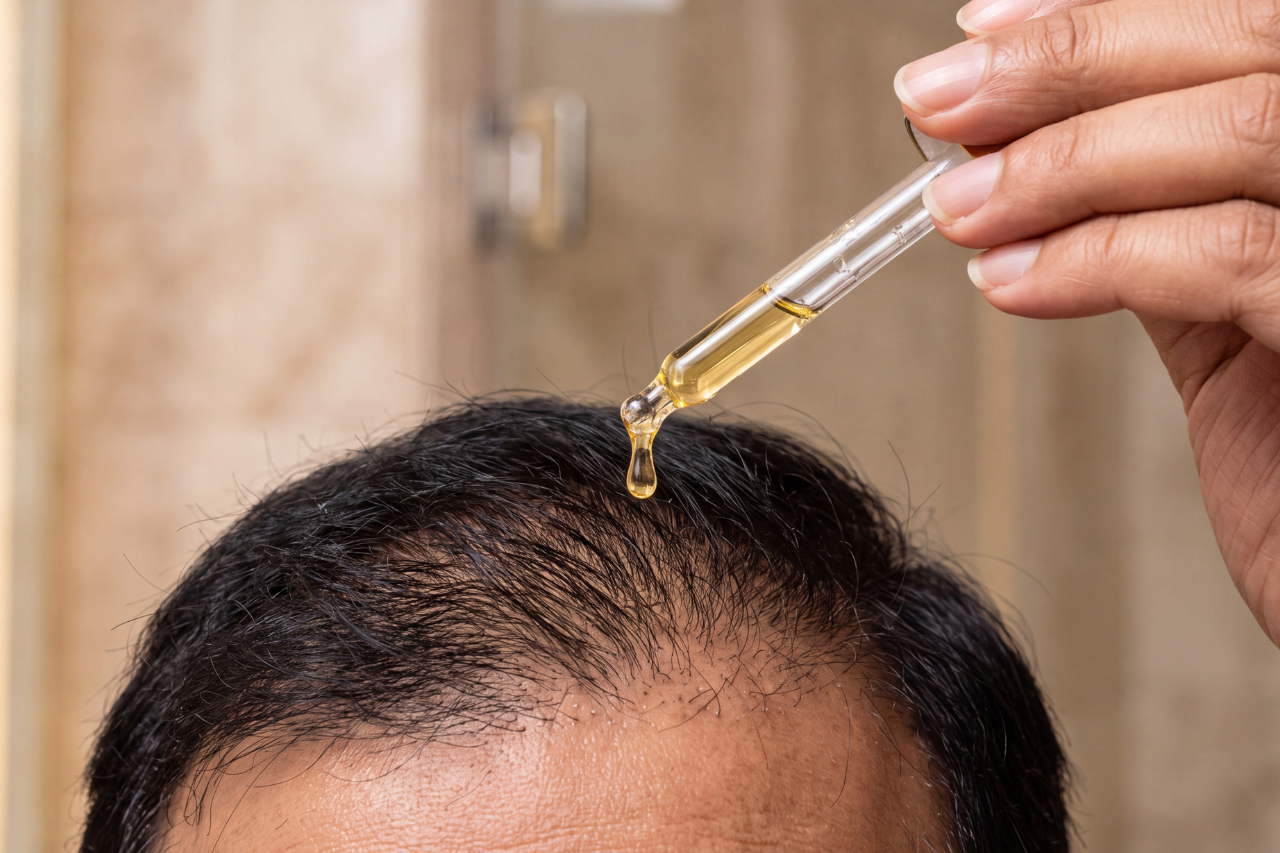
A hair transplant can sound like the obvious next step when your hairline is receding or your crown is becoming increasingly visible.
But hair restoration is not simply about filling an empty area.
It is also about understanding what may happen to the hair you still have.
That is why Hair Finasteride in Gig Harbor deserves a conversation before some men move directly toward transplantation.
Finasteride has established clinical evidence for male pattern hair loss. Research has shown that it can slow progression and improve hair-growth measures in appropriate men, although individual outcomes vary and continued use is generally required to maintain benefits.
At the same time, a Finasteride Prescription Gig Harbor is not automatically right for everyone.
The decision should account for your hair-loss pattern, medical history, goals, potential risks, expectations, and whether other hair-restoration options are being considered.
Apollo Health can help individuals in the Gig Harbor area take a more informed approach to hair thinning and discuss whether prescription options may be appropriate for their individual needs.
Before making a major decision about a hair transplant, understand what is causing your hair loss and what may help protect the hair you still have.
If you are researching Finasteride for Hair Loss Gig Harbor, schedule a consultation with Apollo Health to discuss your hair concerns, available options, potential risks, and a personalized path forward.
A successful hair-restoration strategy should not focus only on your next procedure.
It should consider how you want your hair to look years from now.